
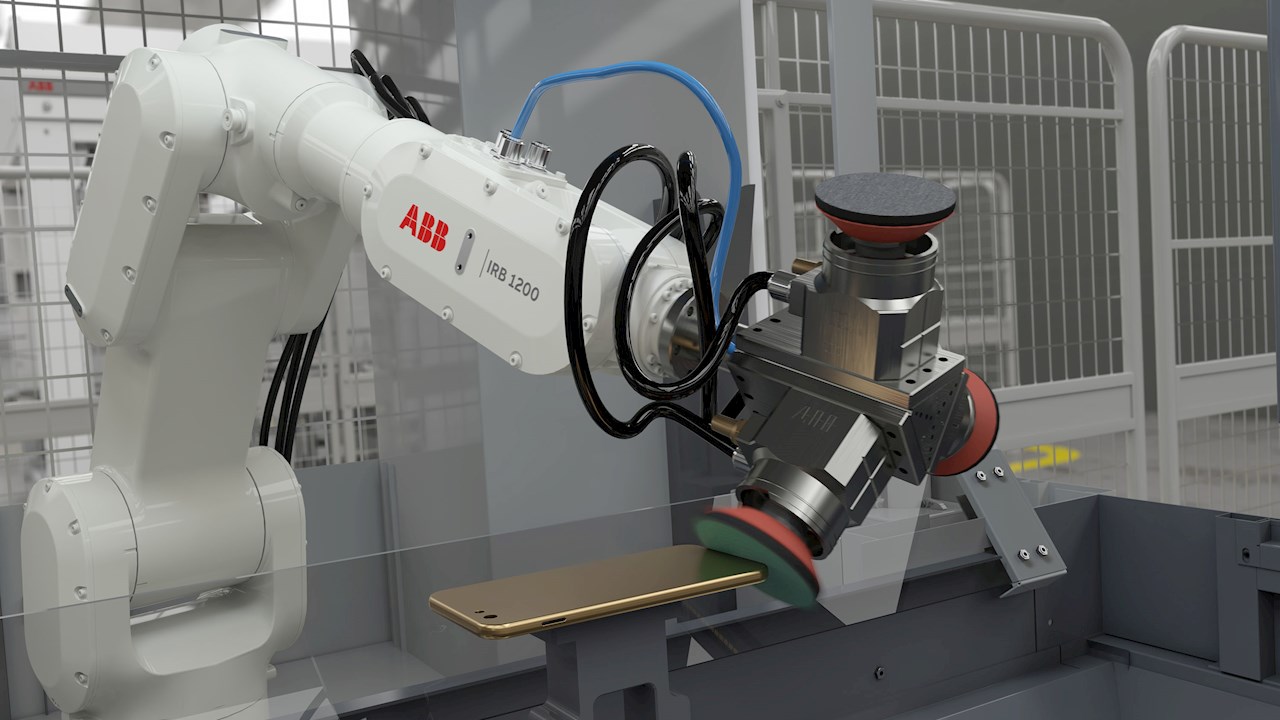
Surface finishing is a system application. The robot creates repeatable motion, but the quality of the result also depends on process force, tooling, abrasive condition, part presentation and the way variation is handled.
Define the finish, not just the motion
Document the required surface result and how it will be inspected. The process may need to remove material, break an edge, polish a surface or create a consistent cosmetic appearance. Each objective drives different tooling and control requirements.
Understand process force and compliance
A programmed path alone may not account for part or tool variation. Depending on the application, compliance, force control or a controlled contact mechanism may be needed to maintain a consistent result.
Size the complete working envelope
- Part size, orientation and fixture access
- Tool weight, cables and process equipment
- Required reach at every tool angle
- Cycle time and production rate
- Maintenance and tool-change access
Design for the environment
Grinding and polishing can introduce dust, debris and heat. Enclosures, extraction, cable routing, guarding and equipment ratings should be considered as part of the cell—not added after robot selection.
Validate with representative parts
Testing the process on actual part variation helps confirm tooling, path strategy, cycle time and finish quality before the final cell is committed.
Common questions
Should a surface-finishing application use an industrial or collaborative robot?
That decision depends on process hazards, required force, tooling, speed, reach, payload and the completed risk assessment. The robot type cannot be selected independently of the full application.
What should be tested first?
Start with representative parts, the intended process tool and measurable finish criteria. Proving the finishing process is usually more valuable than demonstrating robot motion by itself.